nanernunes/overlite repository overview
Overlite


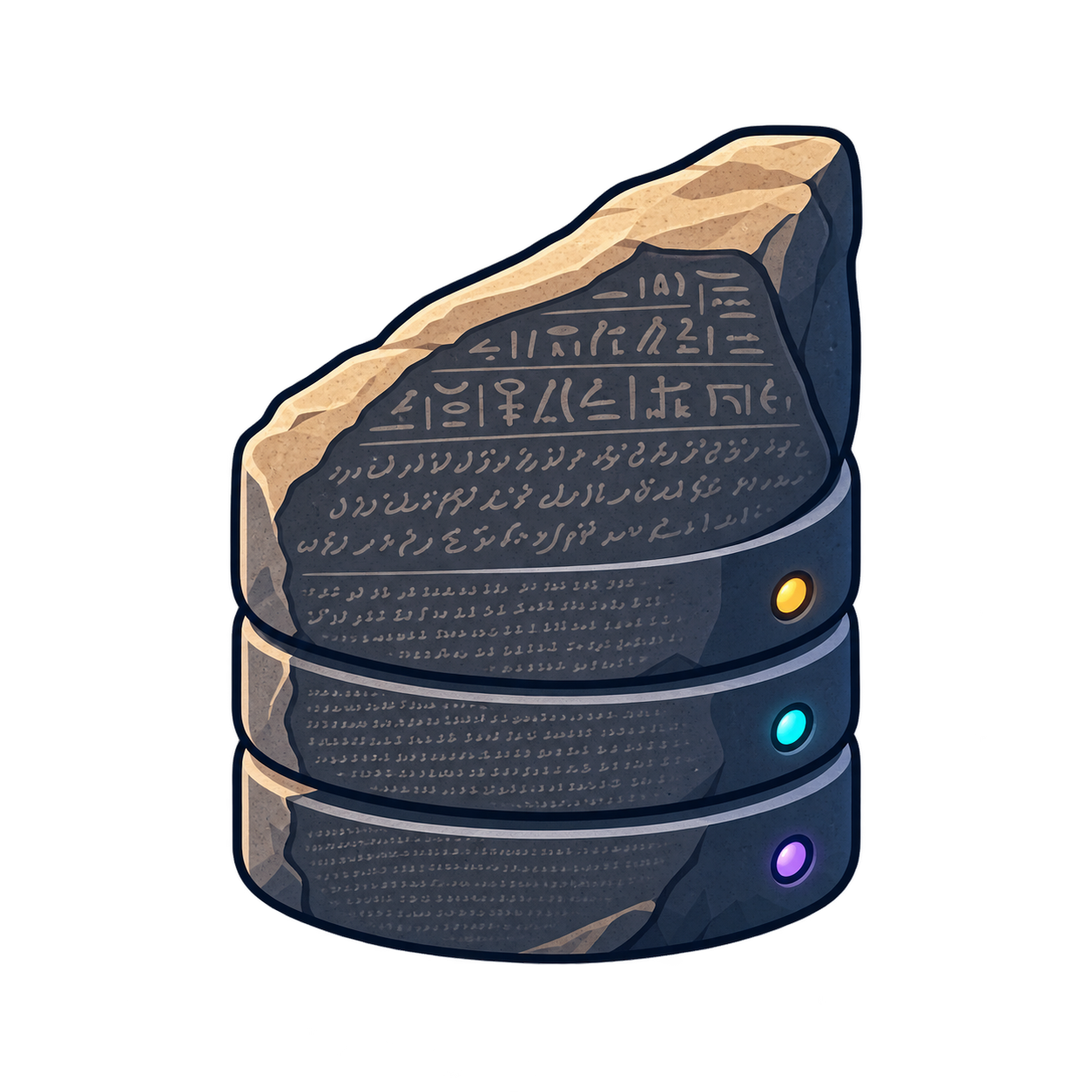
Speak PostgreSQL, store SQLite. overlite is a lightweight server that talks the PostgreSQL wire protocol on the front and keeps all your data in a single SQLite file on the back.
Why
SQLite is a fantastic storage engine, but it isn't a server: no network access, brittle locking over network filesystems, and you have to use SQLite-specific tooling. overlite puts a PostgreSQL-speaking server in front of it so you get:
- Real network access & concurrency — one process owns the file and serializes access, so the multi-access and network-lock problems disappear.
- The entire Postgres ecosystem for free — connect with
psql, DBeaver, and any PostgreSQL driver (pgx, JDBC, …).\dt,\d,\copyall work. - Dead simple to run — a single static binary (pure-Go SQLite, no CGO), no server to provision, no data directory. Point it at a file and go.
Quick start
$ overlite postgres.db
It listens on :5432 and creates the file if it isn't there. The file name is
the database name, so this one is postgres. Connect with any Postgres client:
psql "postgresql://postgres@localhost:5432/postgres?sslmode=disable"
Docker
$ touch postgres.db
$ docker run --rm -p 5432:5432 -v "$(pwd)/postgres.db:/data/postgres.db" nanernunes/overlite postgres.db
touch first so Docker mounts a file rather than creating a directory in its
place — an empty file is already a valid empty SQLite database. The image binds
0.0.0.0 inside the container and writes straight through to the file you
mounted, so postgres.db stays a plain SQLite file on the host. Podman needs
:Z on the mount for SELinux to allow that write.
compose.yaml
services:
  overlite:
    image: nanernunes/overlite
    command: postgres.db
    ports:
      - "5432:5432"
    volumes:
      - ./postgres.db:/data/postgres.db
$ touch postgres.db
$ docker compose up
Configuration
overlite follows PostgreSQL conventions, so it drops into the same tooling and container setups.
| Flag | Env | Default | Description |
|---|---|---|---|
--driver | OVERLITE_DRIVER | postgres | wire protocol to speak |
--host | — | 127.0.0.1 | listen address (0.0.0.0 to expose) |
--db | — | postgres.db | SQLite file; its name becomes the database name |
| — | POSTGRES_PORT | 5432 | listen port (the driver's default, e.g. postgres = 5432) |
| — | POSTGRES_USER | postgres | role shown as owner |
| — | POSTGRES_PASSWORD | (unset) | when set, requires password auth (else trust) |
| — | POSTGRES_SSL | (unset) | on enables TLS with a self-signed cert (clients use sslmode=require) |
| — | POSTGRES_SSL_CERT / POSTGRES_SSL_KEY | (unset) | PEM cert/key to serve instead of self-signed |
--max-open-databases | — | 64 | how many database files stay open at once (see Many databases) |
| — | OVERLITE_HBA_DIR | . | directory holding pg_hba.conf and/or pg_hba.yaml (see below); overrides the global auth method |
The port belongs to the driver — postgres defaults to 5432 — and is only
overridden if you set <DRIVER>_PORT (e.g. POSTGRES_PORT).
POSTGRES_PASSWORD=secret POSTGRES_PORT=5544 overlite shop.db
# -> database "shop", user "postgres", password auth, on :5544
Host-based auth (pg_hba)
Drop a pg_hba.conf (classic Postgres format) or a pg_hba.yaml into
OVERLITE_HBA_DIR to decide the auth method — or a rejection — per connection,
by type / database / user / client CIDR. Rules are evaluated top-to-bottom;
the first match wins, and an unmatched connection is refused (as Postgres
does). If both files are present, pg_hba.conf takes precedence.
# TYPE  DATABASE  USER   ADDRESS         METHOD
host    all       all    127.0.0.1/32    trust
hostssl shop      app    10.0.0.0/8      scram-sha-256
host    all       all    0.0.0.0/0       reject
hba:
  - { type: host,    database: all,  user: all, address: 127.0.0.1/32, method: trust }
  - { type: hostssl, database: shop, user: app, address: 10.0.0.0/8,   method: scram-sha-256 }
  - { type: host,    database: all,  user: all, address: 0.0.0.0/0,     method: reject }
Methods trust, reject, scram-sha-256, md5, and password are enforced;
peer/cert are accepted without their verification. Each role authenticates
against its own password — CREATE ROLE alice LOGIN PASSWORD 'x' stores a
SCRAM verifier (never plaintext), and roles without one fall back to
POSTGRES_PASSWORD.
Many databases
A server started with one file serves one database. It also serves every other
*.db file beside it, and CREATE DATABASE writes a new one there:
$ overlite postgres.db
CREATE DATABASE shop;           -- writes ./shop.db
\c shop
CREATE TABLE orders (id int);   -- lands in shop.db, nowhere else
DROP DATABASE shop;             -- removes the file
The directory is taken from the file, so there is nothing else to configure. Each database is a separate SQLite file with its own connection, which is what makes this the isolation a schema cannot give: a query on one database has no way to name a table in another, however it is written, and a tenant's data can be handed over or deleted by moving one file.
Files are opened as they are asked for and the idle ones are closed once
--max-open-databases (default 64) are open, so a server can hold far more
databases than it keeps open at once. Reopening one costs a handshake.
postgres is always served whether or not the file exists, because a client has
to connect to something in order to create the first database — that is what
psql -d postgres and every migration tool expect.
Schemas
By default all schemas live in the one file — the file you point at is the
public schema, and other schemas are name-prefixed tables in it:
CREATE SCHEMA sales;            -- ordinary write (works inside a transaction)
CREATE TABLE sales.orders (...);
SELECT * FROM sales.orders;     -- cross-schema queries & foreign keys just work
ALTER TABLE sales.orders SET SCHEMA archive;   -- move between schemas
ALTER SCHEMA sales RENAME TO revenue;
This makes CREATE/DROP SCHEMA transactional and lets foreign keys cross
schemas. The file stays plain-SQLite readable (sales.orders is a table named
"sales.orders").
For physical isolation between tenants, give each one a database rather than a
schema: CREATE DATABASE shop writes shop.db beside the file overlite was
started with, and a connection to it can only ever see that file. See Many databases.
Status
High level, at a glance — including what's still needed to be Postgres-ready for a real production system. ✅ done · 🟡 partial · ⬜ not yet.
Across the full feature matrix — 157 items: ✅ 142 · 🟡 14 · ⬜ 1 (90% done, 99% at least partial):
| Area | ✅ | 🟡 | ⬜ |
|---|---|---|---|
| Wire protocol | 14 | 0 | 0 |
| Authentication | 9 | 0 | 0 |
| DML (queries) | 12 | 1 | 0 |
| DDL (schema) | 30 | 5 | 0 |
| Data types | 11 | 4 | 0 |
| Transactions | 8 | 1 | 0 |
| Schemas | 10 | 0 | 0 |
| Catalog / introspection | 21 | 1 | 1 |
| Functions & dialect | 21 | 1 | 0 |
| Tooling (psql/pg_dump/GUIs) | 6 | 1 | 0 |
Every ✅ is exercised end-to-end against real psql and pgx (make test). The
remaining 🟡/⬜ items — the gap to a drop-in production Postgres — are listed in
full under Limitations.
Deciding whether to migrate? overlite vs PostgreSQL goes subsystem by subsystem — what you get, what is planned, and what will never be there because it belongs to SQLite.
Limitations
Everything not listed here is implemented (see Status). This is the complete set of gaps — 🟡 partial (works, with caveats) · ⬜ not implemented.
Types
- 🟡
numericinfix arithmetic —+-*/use SQLite's float operators (which can't be overridden); storage, ordering, andsum/avgare exact, anddec_add/dec_mul/… give exact results explicitly. Scale isn't enforced. - 🟡
hstore->returns the JSON-quoted scalar (use->>for text); a bare insert needs the::hstorecast. - 🟡 range & geometric/network types — ranges work (text-stored, constructors,
accessors,
@>,&&), but the closed[a,b]form is ambiguous with a 2-element array;point/box/… andinet/cidr/macaddraren't modeled. - 🟡 enum columns — enforced via
TEXT+CHECKand reported with the enum's own type (so a dump round-trips), but no ordering/comparison. - 🟡 composite types —
CREATE TYPE … AS (…)shows inpg_type/\dT, but the fields aren't modeled. - 🟡
interval—ts ± interval '1 day'andage()work; no bareintervalvalue type. - 🟡 integer OIDs — every integer advertises as
int8andnumericasfloat8inRowDescription(catalog oids exceedint4).
Functions, triggers, extensions
- 🟡 PL/pgSQL functions / procedures / aggregates — accepted so migrations
proceed, but the body isn't executed (no procedural engine).
CREATE FUNCTION … LANGUAGE sqlis fully supported (executed, shown in\df/\sf, dumped). - 🟡
CREATE TRIGGER— accepted; Postgres trigger functions (PL/pgSQL) aren't executed. - 🟡
CREATE/DROP EXTENSION— a no-op; the common functions (e.g.gen_random_uuid) are provided directly.
DDL & constraints
- 🟡
information_schema.check_constraints— empty (SQLite checks are indistinguishable from the enum-backingIN (…)checks).
Query & runtime
- 🟡
LATERALcorrelated subquery — can't reference the left side (a SQLite limit);LATERALover set-returning functions works. - 🟡 configurable isolation levels —
SET/BEGIN ISOLATION LEVELaccepted, no effect (SQLite serializes writes). - 🟡 DBeaver — connects and browses/reads data; full validation in progress.
- ⬜ planner statistics (
pg_statistic,pg_statistic_ext) — empty; SQLite keeps stats in a different shape (sqlite_stat1). (Everything backed by real data —pg_auth_members,pg_policy,pg_depend/pg_shdepend— is populated.)
Tag summary
Content type
Image
Digest
sha256:55f631058…
Size
10.3 MB
Last updated
23 days ago
docker pull nanernunes/overlite