petersem/gym repository overview
Gym app
Gym app for Tafe stage 2 assessment
- Backend MVC app
- Backend API (coming soon)
- Frontend React app (coming soon)
Backend Gym App
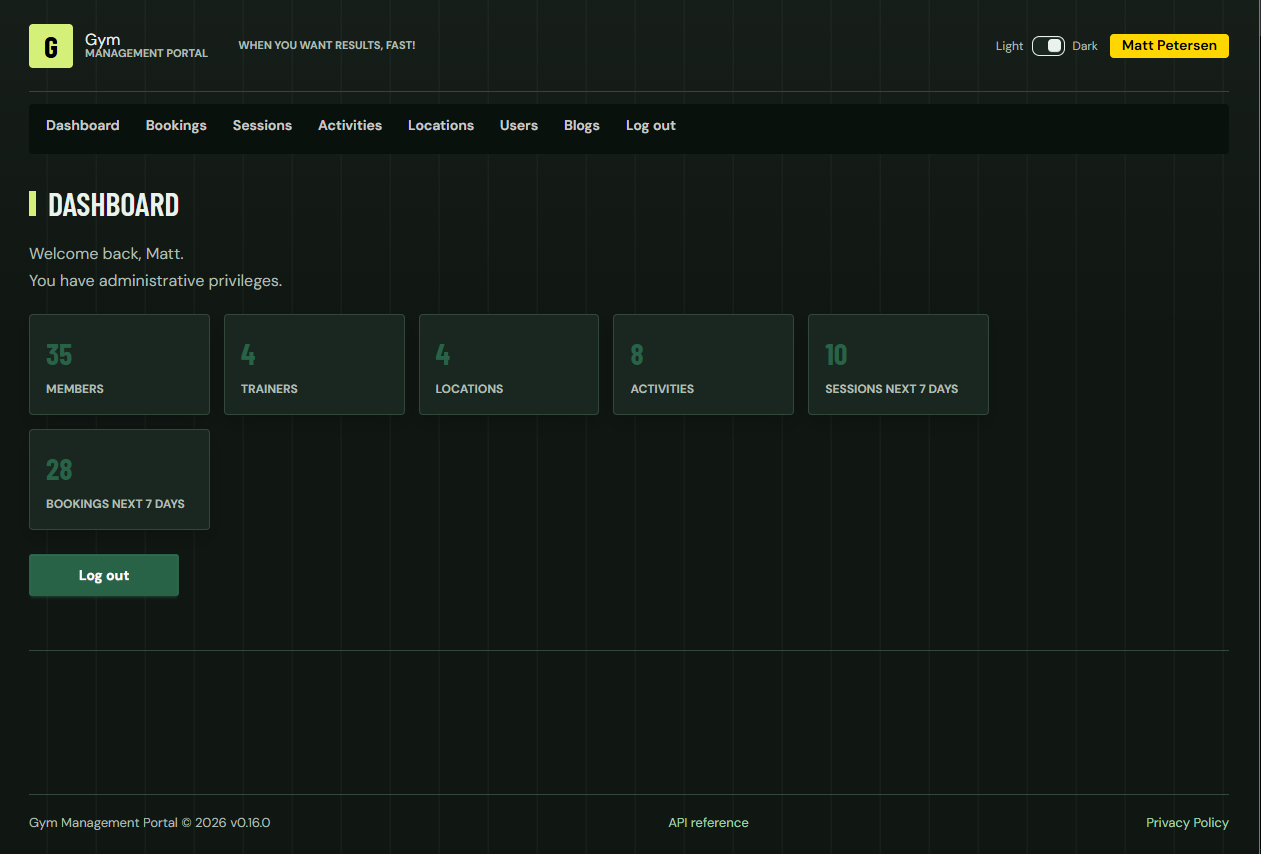
Architecture

Bookings
The desktop and mobile menus highlight the current page section, including its record-edit pages. This works with or without JavaScript.
On the Bookings page, selecting All locations shows the session location beneath each booking. Selecting a specific location hides this extra line.
Sitemap by Role
Role colors:


¹ Trainers can manage only their own
² Guests can only view, not book sessions
Hierarchical Sitemap
The Dashboard is the landing page for all roles. Its content changes for guests, members, trainers and admins; the dashboard views below are not separate pages.

Running the code
There is NO NEED to run any speific database or schema creation SQL. The application takes care of this for you.
Sample data
If you choose to seed sample data on your first install, the passowrd for all sample users is testing123.
Besides your app admin account, here are a few users to get you started:
Trainers
Members
Development Environment
- You will need to have mySQL v8 or above installed and running
- Configure the .env file.
Example backend/.env:
# app settings
PORT=3000

# database connection settings
DB_HOST=127.0.0.1
DB_PORT=3307
DB_ROOT_PASSWORD=rootymctooty
DB_NAME=gym

# database app user credentials
DB_USER=gymuser
DB_PASSWORD=Testing123!

# app admin credentials
[email protected]
ADMIN_PASSWORD=testing123

# Seed sample data into database
DATA_SEED=true
- If you have just cloned this repo, run
npm iandnpm i -w backendto install prerequisit packages. - From the top-level folder, run the following command
npm run devall -w backend
This is how you will start the app in development every time.
- A database initialisation script process is started. If this is a new installation the following will execute, otherwise these steps will skip:
- Create the database
- Create tables and foriegn keys
- Create a database user account for the application
- Set priviledges for database user account
- Create an application admin user if there is no admin
- Seed sample data if a new database and the seed option is true
- The application is then started and available locally on the specified port.
** Other dev options **
- Run unit and integration tests with individual test results and coverage
npm run test - Run eslint linter
npm run lint - Run prettier linter
npm run prettier:check - Generate JSDoc documentation backend/src/public/docs
npm run jsdoc - Run tests with output to test_results.txt file
npm run testfilee
Docker (Recomended for production)
- Docker is installed and configured
- On your docker host machine, create and populate
.envandcompose.yamlfiles. Suggested options below:
Example .env:
# app settings
PORT=3000

# database connection settings
DB_HOST=127.0.0.1
# This is the port if you want to connect with mysql workbench. Change as needed
DB_PORT=3307
# Your mySQL root password
DB_ROOT_PASSWORD=rootymctooty
DB_NAME=gym

# database app user credentials
DB_USER=gymuser
DB_PASSWORD=Testing123!

# app admin credentials
[email protected]
ADMIN_PASSWORD=testing123

# Option to populate with same data (only on first install)
DATA_SEED=true
Example compose.yaml file
services:
  gymdb:
    image: mysql:8.0
    container_name: gymdb
    restart: unless-stopped
    environment:
      MYSQL_ROOT_PASSWORD: ${DB_ROOT_PASSWORD}
      MYSQL_ROOT_HOST: "%"
    ports:
      - ${DB_PORT}:3306
    volumes:
      - gymdb-data:/var/lib/mysql
    healthcheck:
      # $$ defers expansion to the container so the healthcheck uses its own root password.
      test:
        [
          "CMD-SHELL",
          'MYSQL_PWD="$$MYSQL_ROOT_PASSWORD" mysqladmin ping -h 127.0.0.1 -uroot',
        ]
      interval: 10s
      timeout: 5s
      retries: 10
      start_period: 180s

  gymapp:
    image: petersem/gym:latest
    container_name: gymapp
    restart: unless-stopped
    ports:
      - "3001:3000"
    environment:
      NODE_ENV: production
      PORT: 3000
      DB_HOST: gymdb
      DB_PORT: 3306
      DB_USER: ${DB_USER}
      DB_PASSWORD: ${DB_PASSWORD}
      DB_NAME: ${DB_NAME}
      DB_INIT_USER: root
      DB_INIT_PASSWORD: ${DB_ROOT_PASSWORD}
      DATA_SEED: ${DATA_SEED:-false}
      ADMIN_EMAIL: ${ADMIN_EMAIL}
      ADMIN_PASSWORD: ${ADMIN_PASSWORD}
    depends_on:
      gymdb:
        condition: service_healthy

volumes:
  gymdb-data:
Once you have configured these files, from the same directory, run docker compose up -d gymapp This will first create and install mySQL, and then it will create a container for the gym app.
If this is the first time the database is being created, this process can take a couple of minutes before things are running. Be patient!
Once it says gymdb is healthy and gymapp says running, the app is ready to be opened in a browser on the docker host ip:[specified port]
Tag summary
Content type
Image
Digest
sha256:95c6bcc4a…
Size
89.1 MB
Last updated
2 days ago
docker pull petersem/gym